Updated October 2026 · By Bencke’s Tile
What is the real difference?
Both tiles are made of clay and baked in a kiln. Porcelain is made from finer clay and baked hotter, so it comes out denser and tighter. That is why it takes in so little water.
The industry measures this. Under the tile standard ANSI A137.1, a tile counts as porcelain when it absorbs 0.5 percent water or less. Ceramic tile takes in more, from a little over 0.5 percent to more than 7 percent, depending on the type.
One warning. Stores do not always use the words the same way, and some tile sold as ceramic is really porcelain. Do not trust the label on the shelf. Look at the water absorption number on the spec sheet or the box.
Porcelain vs ceramic, side by side
This table covers the points that matter most in a bathroom or kitchen.
| Porcelain | Ceramic | |
|---|---|---|
| Water absorption | 0.5% or less | More than 0.5%, up to over 7% |
| Density | Dense and hard | Softer and more porous |
| A chip shows | Often the same color all the way through, so chips hide | Often a glaze on top, so a chip can show a different color |
| Cutting | Needs a wet saw with a diamond blade | Many can be scored and snapped; a wet saw still gives a cleaner cut |
| Outdoors, where it freezes | Good, if the box says it is rated for outdoors | Usually not |
| Best spots | Shower floors, bathroom floors, kitchen floors, steam showers | Walls, backsplashes, low-traffic rooms |
| Price | Usually higher per square foot | Usually lower per square foot |
Water: why it matters, and why it is not the whole story
A tile that takes in less water handles wet floors, steam and freezing weather better. That is the main reason porcelain is the safer choice for floors that get wet, such as a shower floor or a mudroom.
But the tile body is not what keeps a shower dry. The joints between the tiles are grout, and standard cement grout lets some water through. What protects the wall is the waterproof layer behind the tile. A ceramic wall with a good membrane behind it is safer than a porcelain wall with none. Our shower waterproofing guide explains that layer.
Floors need a grip rating
Tile that gets wet needs grip. Makers test this and print a number called DCOF, which stands for dynamic coefficient of friction. For level indoor floors that are walked on when wet, the tile standard uses 0.42 as the benchmark. Ask for the wet DCOF number of any tile you want on a bathroom floor.
Treat the number as a starting point, not a guarantee. Polished tile can feel slick with wet feet even when the paper looks fine. On a shower floor, small tiles are a smart pick because they follow the slope to the drain and add many grout lines that help grip.
Walls, backsplashes and accent walls
Walls do not take foot traffic, so ceramic does well here. It comes in a huge range of colors, shapes and glazes, and it is easier on the budget over a large wall. A kitchen backsplash is the classic ceramic spot.
One check: wall tile is often thinner and is not always made for floors. If you want the same tile on the wall and the floor, make sure the box says it is rated for floors.
Looks: gloss, matte and printed patterns
Both types come in plain colors, glossy glazes, matte finishes and textured surfaces. Modern porcelain is often printed with a pattern, so it can copy marble, wood or concrete in a very convincing way. Ceramic is where you find the widest range of glazes, hand-made looks and small decorative shapes.
Whichever you like, look at the sample in your own bathroom light. Tile looks different under a window than under a store ceiling.
Cutting and setting: what your installer deals with
Porcelain is hard. It takes a wet saw with a diamond blade, patience on cuts around pipes and niches, and sharp tools. A good installer plans for that, and you should expect the tile setter to be comfortable with it.
Dense tile also needs the right adhesive. Tile and mortar makers usually call for a polymer-modified thinset on porcelain, and the instructions on the bag and the box decide. Ask your installer which thinset they plan to use and why.
Porcelain tile itself never needs sealing. The grout between the tiles usually does if it is cement-based. Our grout types guide covers the options.
So which one for which room?
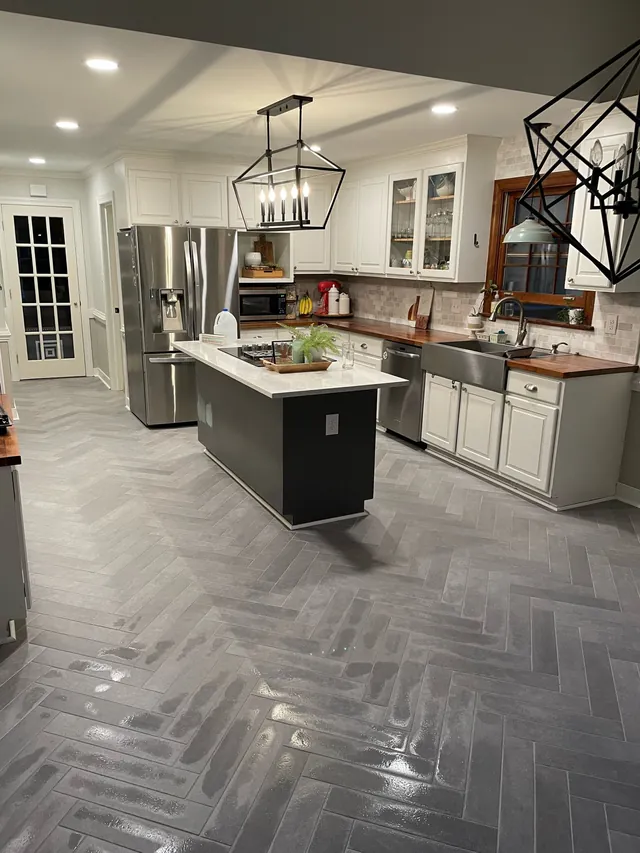
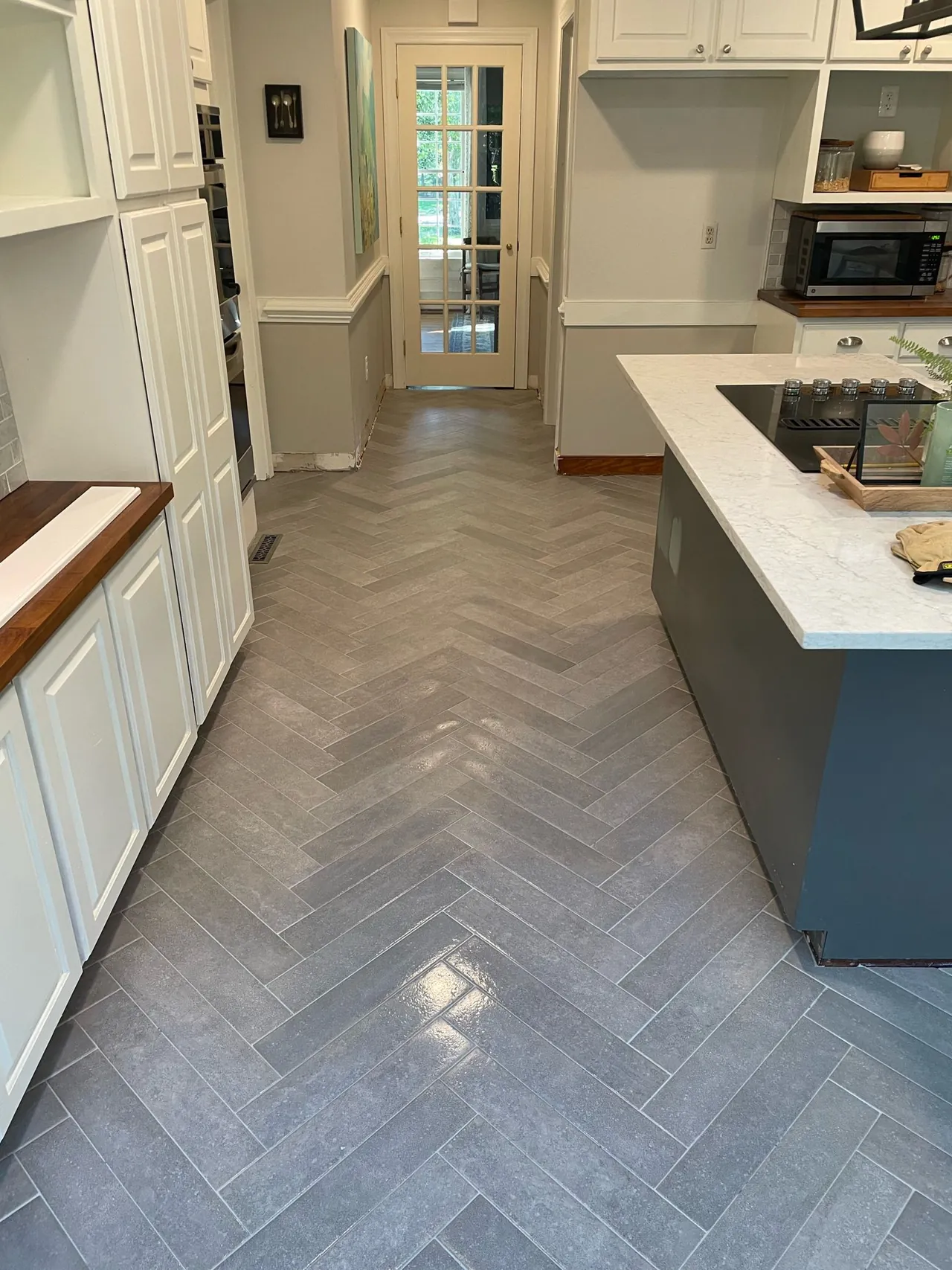
Shower walls: either one works when the waterproofing behind it is right. Shower floor: porcelain, in a small tile. Bathroom floor: porcelain. Kitchen floor: porcelain, because of traffic and spills. Kitchen backsplash: either one, and ceramic is a common, sensible pick. Entry and outdoor areas: porcelain that is rated for outdoors.
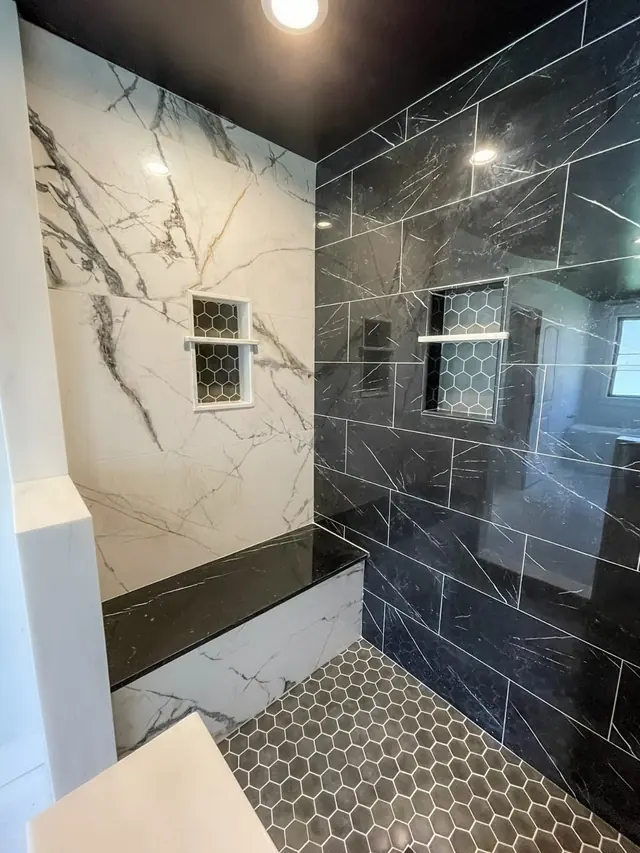
Many marble-look tiles are porcelain. If that look is what you want, read our guide on marble-look porcelain vs natural stone before you shop.
Check this before you buy
Four quick checks save a lot of regret. First, read the water absorption number. Second, check the floor rating and wet DCOF if the tile goes on a floor. Third, ask for a sample and look at a broken or cut edge to see if the color runs through. Fourth, order about 10 percent extra from the same production lot, because color can shift between lots and you will need spare tile for cuts and future repairs. Complex patterns and big tile can need more.