Updated October 2026 · By Bencke’s Tile
What each one is
Natural marble is a stone, cut from the ground and polished. Its main mineral is calcite. Every piece has its own veining, and no two are alike.
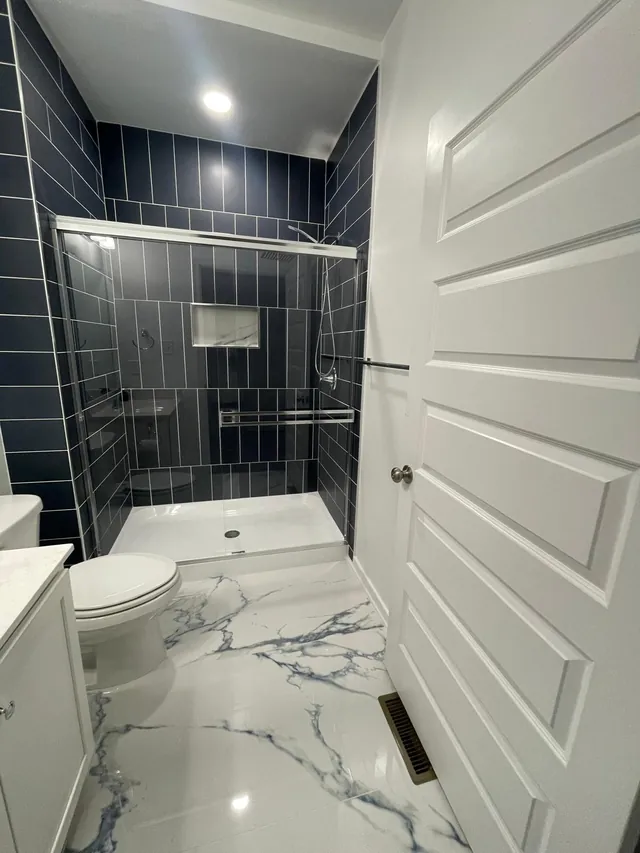
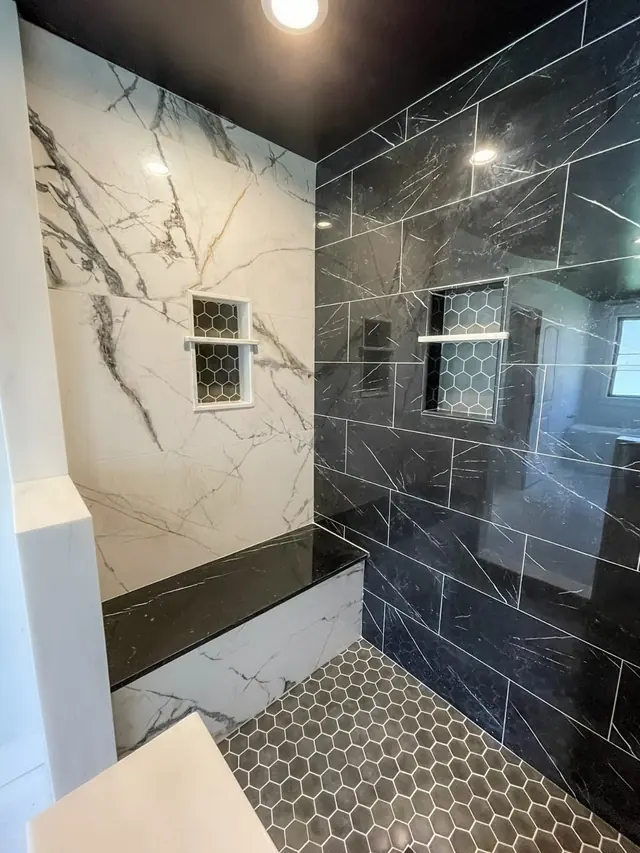
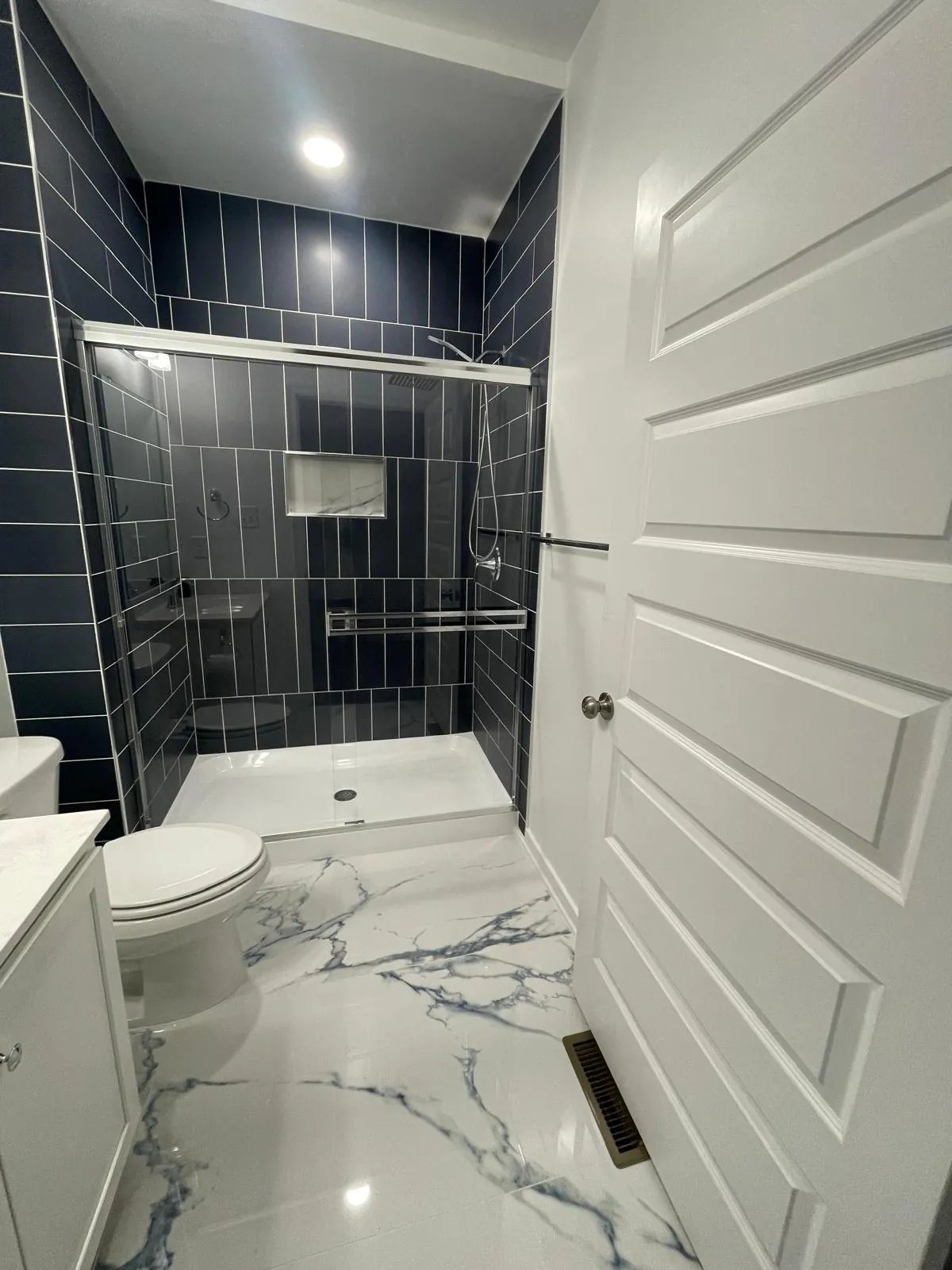
Marble-look porcelain is a manufactured tile. A photo-quality image of marble is printed on the surface, and the tile is fired until it is dense and hard. Good ones copy the real stone closely, and the printing on newer tile has closed much of the gap.
Side by side
This is the comparison most people want.
| Marble-look porcelain | Natural marble | |
|---|---|---|
| Look | Printed copy of marble; patterns can repeat | Real stone; every piece is unique |
| Stains | Resists them; porcelain does not need sealing | Porous; needs sealing and still can stain |
| Acids (lemon, vinegar, some cleaners) | No etching on the tile | Etches (dull spots) |
| Scratches | Hard surface | Soft; scratches more easily |
| Upkeep | Wipe clean | Seal, and use a gentle cleaner |
| Color over time | Stays as it was | Can shift with age and wear |
| Cost and handling | Usually costs less; more choices of size | Usually costs more; heavier and needs more care |
Etching and staining are not the same thing
A stain is something that soaks into the stone, such as oil, wine or coffee. A sealer helps against stains.
Etching is different. Calcite dissolves in acid, so a splash of lemon juice, vinegar or a strong bathroom cleaner can eat the polish off marble and leave a dull spot. A sealer does not stop it, because the acid reacts with the surface of the stone. Polished marble shows etching the most. Honed marble, which has a flat, matte finish, hides it better, but it still happens.
Scratches and wear
Calcite is a soft mineral, around 3 on the Mohs hardness scale. Everyday grit, which often contains quartz, is harder than that, so marble can scratch with ordinary use. A honed finish hides scratches better than a polished one.
Porcelain is much harder, which is why marble-look porcelain is such a common pick for floors and busy kitchens.
Can marble go in a shower?
Yes, many people use it. It needs the same waterproofing behind it as any shower, and it needs more care in front of it. Use a stone-safe, pH-neutral cleaner. Avoid acidic cleaners, even the ones sold as soap scum removers. Expect to reseal on a schedule, and expect to see some dulling around the showerhead and on shelves where products sit.
Choosing grout and thinset matters for stone too. Polished marble can be scratched by sanded grout, so ask the stone supplier what they recommend. Light marble can show the color of a gray thinset through the stone, so installers often use a white one. Our grout types guide covers the grout side.
Does marble-look porcelain look fake?
It depends on the tile and where you stand. The best new porcelain has vein patterns that run across the tile and into the edges, and many different faces in one box, so the floor does not look like the same few tiles repeated. Cheap ones repeat a small set of images and look flat.
Always look at several tiles from several boxes. Check a full-size sample in your own light, not just a small chip. Look at the edge, too. Rectified tiles with a clean edge let you use narrow joints, which makes the surface look more like a slab.
How each one ages
Porcelain looks the same in ten years as it did on day one, as long as it is cleaned normally. That is its biggest selling point. Natural marble changes. The polish softens in the places where people walk and where water sits, small scratches build up, and some people love that worn, lived-in look. This is called patina. If you want the room to look new for as long as possible, choose porcelain. If you want a room that looks like it has history, marble can give you that.
Big sizes and fewer joints
Porcelain is made in very large sizes, including big panels, which means fewer joints and a look closer to a slab. That is a nice match for the marble look, but large tile has its own rules for flatness and setting. Our large format tile guide goes through them. Natural marble tile often comes in smaller sizes, set with a thin joint, and marble slabs are a custom stone job.
Which one should you pick?
Pick porcelain if you have kids or pets, if the room will be used every day, if you cook with lemon, tomato and wine, or if you want to stop thinking about it after the job is done. Pick natural marble if you love real stone, you accept that it will age and show use, and you are ready to seal it and care for it. Some people choose both: real marble as a small feature, such as a vanity top or a niche, and porcelain on the big surfaces.
If you are not sure, take a sample of each one home and spill a little lemon juice on the marble sample. Seeing the dull mark teaches more than a long list of pros and cons.
Quick buying tips
Ask whether the tile is porcelain by checking its water absorption on the spec sheet. Ask about the wet DCOF rating for floors. Ask how many different faces the tile has. Buy extra from one lot. And ask your installer which thinset and grout they would use with your tile. Our porcelain vs ceramic guide has more on reading the spec sheet.