Updated October 2026 · By Bencke’s Tile
The patterns at a glance
The same tile can look very different in each layout. This table shows the main ones.
| Pattern | How it looks | Cuts and waste | Good for |
|---|---|---|---|
| Straight stack | Rows line up in a grid; modern and calm | Lowest | Walls, shower walls, small spaces |
| Running bond | Offset rows, like brick | Low | Backsplashes, shower walls, floors |
| Herringbone | Rectangles in a zigzag | Higher | Floors, backsplashes, feature walls |
| Chevron | Tiles cut at an angle so the zigzag meets in points | Highest | Feature walls, floors |
| Diagonal | Square tile turned 45 degrees | Medium to higher | Floors that need to look bigger |
| Basketweave | Pairs of tiles turned in turn | Medium | Floors, classic and vintage looks |
Straight stack and running bond
Straight stack lines every joint up, both ways. It is clean and modern, and it shows every crooked joint, so the walls and the layout need to be right. Running bond offsets each row, like bricks, which hides small flaws and adds some movement.
With a long tile, the offset matters. For large rectangular tile, a one-third offset is usually better than half, because it hides edge bow. Our large format tile guide explains why.
Herringbone
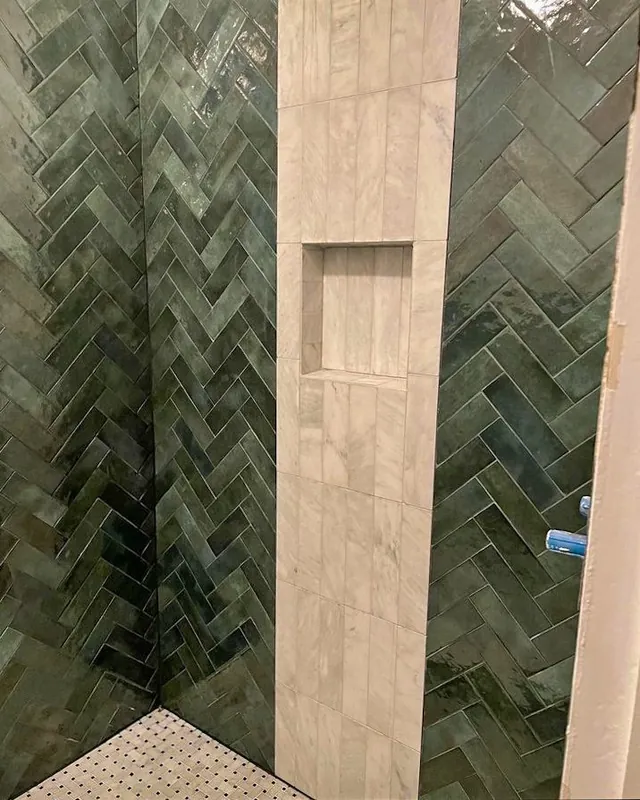
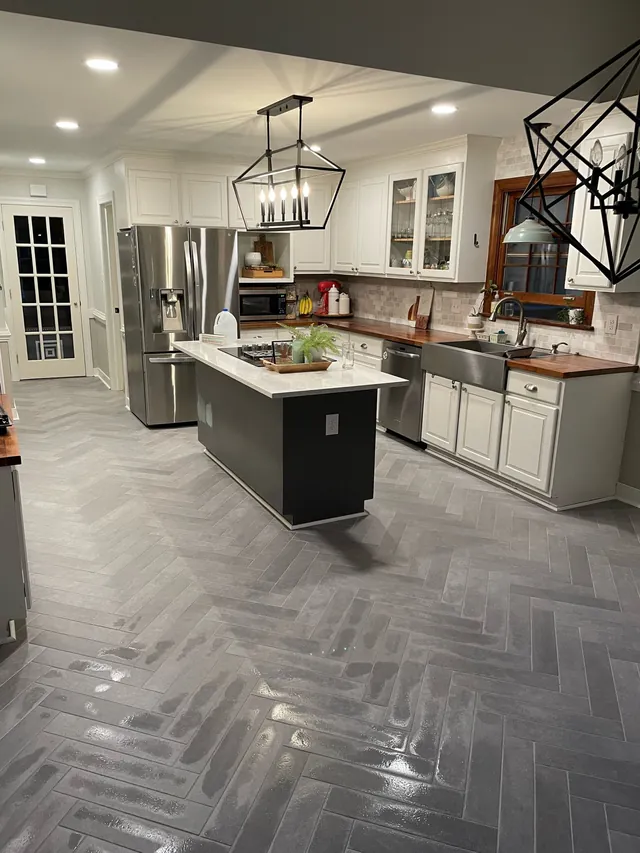
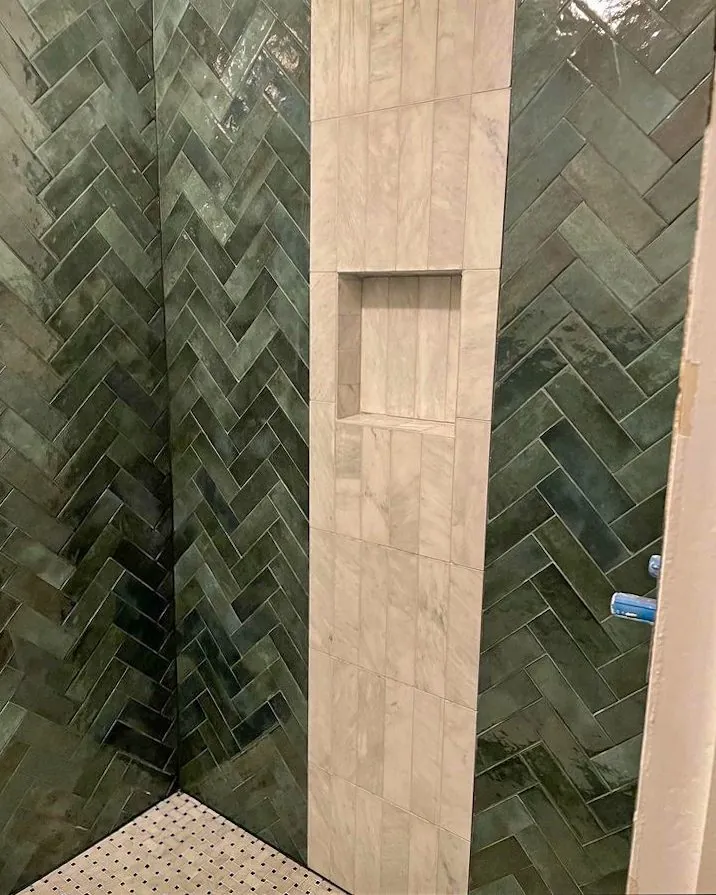
Herringbone sets rectangles in a zigzag. It has been used for centuries in wood floors, and it looks just as good in tile. It adds a lot of movement to a floor or a backsplash without being loud.
Herringbone can be laid at 90 degrees or at 45 degrees to the walls. The 90-degree version has fewer awkward cuts at the edges. The 45-degree version cuts more but flows nicely into a room. It works best with rectangles that are twice as long as they are wide, such as 2 x 4, 3 x 6 or 4 x 8 inches, or long planks.
The herringbone math that surprises people
For a herringbone pattern to close up neatly, the long side of the tile has to equal a whole number of short sides plus the joints. If it does not, the pattern drifts. Choosing the tile and the joint width together, before you buy, avoids a problem that is costly to fix. Trimming every tile on site to force a pattern to fit is slow and rarely looks right.
Herringbone also exaggerates an uneven floor, so the surface must be flat first. Installers start from the center of the room or the focal point, not from a wall. They dry-lay a few rows and check the angle often so it does not wander.
Chevron
Chevron looks like herringbone, but each tile end is cut at an angle so the pieces meet in a clean V. It is sharper and more graphic. Each cut takes time, and the offcuts are waste, so chevron costs more in labor and in extra tile. You can also find chevron tile with the angle already cut at the factory.
Diagonal and basketweave
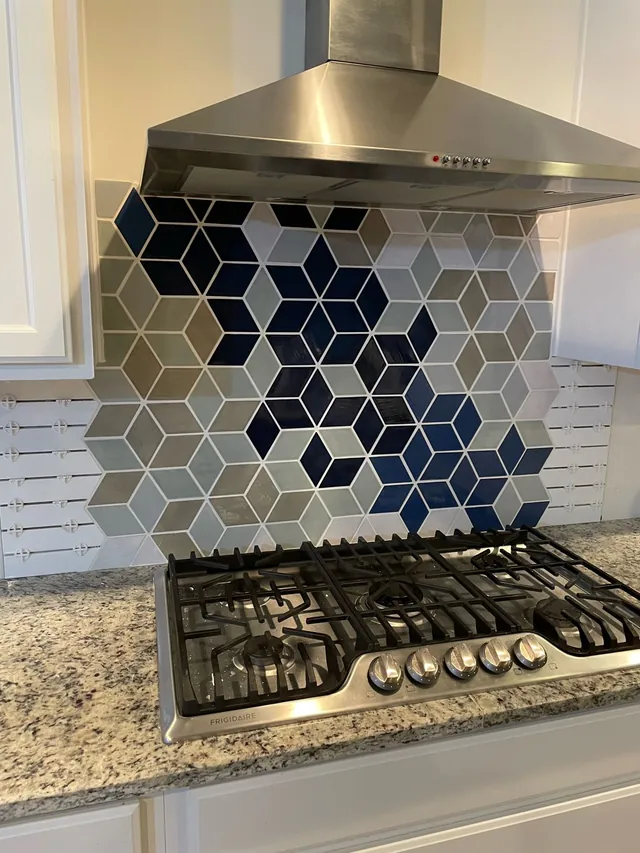
Square tile set on a diagonal makes a room feel larger and hides walls that are not square. It needs more cuts along the edges. Basketweave pairs two or three rectangles side by side, then turns the next pair. It has a classic bathroom floor look, often used with a small square tile in the corners.
Beyond the classics: hexagon, penny round and mosaics
Not every layout is a row of rectangles. Hexagon tile makes its own pattern as it fits together, and it is a popular pick for shower floors and bathroom floors. Small round and penny tile, and mosaic sheets, follow a curve or a slope easily, which is why they show up on shower floors and in niches. A mosaic sheet is a group of small tiles on a mesh backing, so it goes down faster than setting each tiny piece alone.
Direction changes the feel of a room
How you run the pattern matters as much as which one you choose. Long tiles laid lengthwise in a narrow room lead the eye along it. A straight stack of long tiles set vertically on a shower wall can make the ceiling feel higher. A bold pattern on one feature wall, such as behind a vanity or in a shower niche, gives you the look without covering the whole room. You can also pair a patterned floor with simple walls so the two do not fight each other.
Planning the extra tile
Every pattern needs extra tile for cuts and mistakes. As a rule of thumb, about 10 percent for a straight layout, about 15 percent for a diagonal, and 15 to 20 percent for herringbone or chevron. Small tile, tight rooms and lots of corners push those numbers up. Buy the tile from one production lot, because color can shift between lots.
Grout color changes the pattern
Matching grout softens a busy pattern and makes the tile look like one surface. Contrasting grout draws every line, which can make a simple layout feel designed, or make a busy one feel loud. Try both with a sample board.
Which pattern for which room?
For a quiet bathroom wall, go straight stack or a one-third running bond. For a kitchen backsplash, running bond and herringbone both work. For a floor you want to notice, herringbone is a safe, timeless choice. For a small powder room, a diagonal can open the space. Whatever you pick, ask your installer to check that the walls and floor are flat and plumb, because patterns make flaws easier to see.